
This is the second of two essays, arising from recent revelations of expenditure by the Arts Council on a non-functioning IT system. The first and shorter one, published on Feb 24th, looks only at the immediate impact of the breaking news. This one delves into the real crisis facing the arts: the absence of a functioning system that remunerates artists in a consistent and cohesive manner for their work.
- REFLECTIONS ON AN OUTRAGE
A meeting was held by the National Campaign for the Arts on January 20th to canvas artists’ perspectives and views on the unfolding Arts Council crisis. There was palpable anger among delegates, at the misspending of €5.3m on a failed IT system. The anger was matched by a deep anxiety which arises not only from the fact that artists in the main are underpaid: but equally they are left in a constant state of uncertainty concerning livelihood. And this precarity causes a lingering sense of vulnerability to the spectral threat of ignorant public commentary: “What if this mishap leads to calls to reduce funding to the arts?” Artists, the articulate, visionary, hard-working makers and shapers of our nation’s image, music and stories: celebrated at home; heralded abroad, feel disempowered in the State that trumpets their value!

Given the reports coming these weeks from the USA about the new regime’s attacks on arts organisations, and occasional noises that emanate from right wing complainers at home, this new pang of an old fear is understandable. I think, however, we can have greater faith in the Irish public and even politicians to separate the victim from the accused in this immediate situation. Even though they may not have a full comprehension of the complex and ill-suited mechanisms of funding, Irish people generally understand the value of the arts and are sufficiently intelligent to know that a thriving cultural sector must be part-financed by the modern State. The whole debacle, however, reminds us that the very means of providing for artists’ livelihoods is outmoded and unfit for purpose.
The place of the arts in Ireland is one of the nation’s comic paradoxes. The arts are generally embraced as a good news story. An Irish movie wins an Oscar: we celebrate. An Irish band wows Glastonbury, we celebrate. Artists appear on the Tommy Tiernan show and everyone applauds. The arts equally are easy fodder for ridicule the odd time a thing goes wrong. A work of public sculpture displeases a rustic County Councillor: the news goes viral. The Abbey Theatre has one of its periodic financial or governance crises, and the press goes into overdrive. And so on.
In the space of three days in February, the Irish Times gave over 12 separate articles plus an editorial to the Arts Council’s IT failings: in the same month, revelations of enormous expenditure by the Department of Social Protection on IT merited just one. Responses to arts and culture matters are inevitably disproportionate: too much excitement about the wrong things; far too little concern about the consistent failings when it comes to a modern, grown-up system of State investment.
2. AID AT ARMS LENGTH
All of this distracts even artists themselves from reflection on why the current provision systems are so unfit for purpose. Participants in the January 20th webinar were incensed at perceived Arts Council failings, and yet protective of our beloved institution. In particular, the age-old worry arose about potential threats to the ‘arms length’ principle. Artists treasure, as a matter of faith, the system that ensures that grant-aiding decisions are undertaken by an agency which is independent of political control. It is an excellent principle and one that should be guarded. The notion of local councillors or an incoming Minister for the Arts determining what art can and cannot be made or shown is anathema to the fundamental European value of freedom of expression: witness the horror show of America these very weeks as an uncultured president instals himself as Chair and chief censor of a dignified arts centre.
Solidarity with the Arts Council and it ‘arm’s length’ ring-fencing is a reassuring quality among mature artists, many of whom have been dealt crushing rejection blows by the same institution. But the centrality of the Arts Council in our thinking and our financial microsystem becomes problematic when we face the probability that a huge number of artists applying to the same Council depend on what is correctly termed grant “aid’, not only to fund their precious projects, but for their very livelihood. It is quite astounding, quarter way through the 21st century that an antiquated system of prize-giving continues to be the sole or primary source of livelihood for so many artists: more now than ever before. Imagine if nurses had to enter competitions two or three times a year; fill out absurd forms and upload letters of support, just to have wages for perhaps six to twelve weeks!
It is worth noting there are additional, complementary mechanisms whereby artists’ livelihoods are part-supported by the State. Members of National Symphony Orchestra are paid. The injection of funds from Creative Ireland into community initiatives, and improved allocations from various Local Authority arts schemes in recent years, have augmented Arts Council supports towards finite artistic work outputs, leading to improvements in livelihood opportunities for public artists, particularly in rural areas. The Creative Schools programme (est 2018) is a source of direct contract employment to approx. 130 empanelled artists nationally whose practices and qualifications include arts-in-education and inclusive participatory values.

These are commendable additional initiatives, easing the livelihood stresses of differing cohorts of working artists for periods. None operate at “arm’s length” and yet they are functioning. Artists receiving fair pay or contracts (as distinct from grants and prizes) from State and local authority agencies, are generally quite comfortable responding to commissions and criteria, such as the modern school curriculum or the intelligently canvassed ideas of a community where a public artwork is to be sited. Most have independent practices outside of their commissions where other dimensions of their creative vision can find free expression. But these augmenting schemes, while showing that there are other ways to finance the arts, are piecemeal, inadequate and tend to reach only certain niches within the overall mosaic that is art making in Ireland.
3. BASIC INCOME
In 2022, a new and radical idea was piloted, which for the first time in history seeks to separate the matter of livelihood from that of specific projects and artworks. The innovative concept goes under the official title, Basic Income for the Arts. The title is slightly problematic, as discussed below: but in 2022, it represented innovative thinking, although not an entirely new idea.
Some moves to secure artists’ livelihoods have been made historically, but the scale and nature of the initiatives have always been too little, too late, or too fraught. Aosdána was established in 1981, out of a genuine concern that a coterie of established and respected artists of the era faced penury. It has come under scrutiny from time to time and while it certainly has alleviated poverty stress for a minority of artists – and sought to do so in a dignified way with the veneer of a noble function – it has been described by many as an anachronism in the modern age.
The BIA pilot scheme is not dissimilar to Aosdána in the practical sense that it guarantees income to certain artists, in a way that respects the unique nature of artists’ work and productivity, but without the public elevation and odd pomp and ceremony of the old institution. Entry to the BIA scheme is more egalitarian and discreet than is the case with Aosdána. Recruitment to the pilot was based upon a lottery among thousands of artists deemed eligible, rather than arbitrary barometers of grandeur.
The BIA trials, however, have scarcely scratched the surface numerically, and the future of the scheme is anybody’s guess. Its primary champion, former Arts Minister Catherine Martin, is no longer in office. The pilot phase saw benefit for 2000 artists (out of 14000 deemed eligible). It runs out this year. Expanding the scheme is a key demand of the National Campaign for the Arts. Given that the new minister has distinguished himself so far only in his outraged reaction to the Arts Council IT mess, which he regrettably inherited, and his plan to expand his “waste removal” crusade to other cultural bodies, it is difficult just yet to see him in the role of magical dispenser of a radical and costly payment scheme, however necessary, directed towards the bank accounts of artists.
On the plus side, re-elected cabinet members are bound – up to a point – to accept the evaluation reports on the pilot they signed off on, and take some action. The new Programme for Government includes a commitment to ‘assess the Basic Income for Artists [BIA] pilot to maximise its impact’. It would be politically regressive to abandon the programme completely; expedient to repeat or expand it in a niggardly way. If we are optimistic, and the number is – say – doubled, it will ease distress for a few thousand more artists. However, it will still leave thousands of hapless applicants to its lottery selection not so much disappointed, as terrified and despairing when the letter of rejection arrives.
All parties need to take a helicopter or space satellite view. If we value the Arts as we value Justice, Education, Environment and other non-tangible public benefits, then we as a society (including artists) need to rethink what an artist in 21st Century Europe looks like, and how modern artists should be paid and protected. What is certain, is that the Arts Council is not equipped for the absurd task it now de facto faces. No artist, recognised as an artist, in a European nation should go hungry while waiting on annual or bi-annual bursary and project award schemes, in the hope, if they are truly excellent, that they might get lucky once every three or four years. Right now, we are working with twentieth century, cobbled-together solutions, and hidebound by nineteenth century perceptions and definitions of the artist as so utterly ‘other’ that simple systems of recognising work as work cannot apply.

HOW ABOUT “BASIC WAGE” FOR ARTISTS?
This is where the concept of Basic Income may need re-naming and some re-design. The current title is borrowed from the Utopian and humane “Universal Basic Income” idea which negates conventional industrial notions of productivity in an ideal world, and provides unconditional payments to all citizens. In the harsh politics of this century, there needs perhaps to be a more forthright assertion, not of the right of artists in some exceptional way to a unique, unconditional stipend, but of the hard fact that artists work and are grossly underpaid for their work!
Most professional artists work all the time. They live in society, and their work – even the wildest and most esoteric – benefits society. The ways of benefit are so many that listing them inevitably drags the conversation into reductive and outmoded mutterings about instrumentalism: yada-yada tourism spinoff, mental health of the nation, creative learning, taxes paid on earnings, spectacle, festivity, family fun, fodder for necessary outrage, and of course Art for Art’s sake – yada yada, I could fill another page. It is all noise! Either we value the arts for their intrinsic value – regardless of how this kind of art or that kind of art impacts in this parish or that neighbourhood, yonder gallery or some fringe theatre or burlesque somewhere: or we do not! And if we do, then it follows that we pay our artists to get up in the morning and continue to work, as they do, day-in-day-out.
It pleases me to say that in Ireland, notwithstanding the occasional daft view, we do value the arts! It is imperative therefore that we provide intelligently for the livelihood of working artists, just as we provide for our guards, teachers, state foresters, tax collectors, nurses and lifeguards. They get a thing called a wage. Why did we fail so completely for so long, to think of this? Possibly because the true cost was always going to be considerable, although ultimately still but a drop in the overall public spending ocean. Equally likely, it is because, although the solution is so obvious and right in front of us, we have been unable to see it for the silly noise and flashing screens of media chatter that continually distract us. And when a move was finally made in 2022, to pilot a livelihood scheme that separated the holding of a skilled profession from the act of showcasing, it was clumsily named to fuel further the sniggering myth that artists don’t really work at all. Call it a wage and let it be a transparent and accountable transaction!
One thing is for certain, the task of providing essential income to artists cannot be delegated by default any longer to The Arts Council. The institution is unfit for such a purpose, not because its IT machinery is not up to the job, not because its overworked staff are anything less than dedicated, and not because the principle of financing fabulous projects by fine companies and artists is not commendable, but because the ask facing the Council in the absence of a parallel income scheme is impossible. For every 5% increase in Arts Council funding, comes a 10% increase in demand, as more and more young people and new Irish residents, trained and qualified as artists, come forward, aware in the information age of the competitive schemes that exist. We rely far too heavily on our beloved ‘arms-length’ awards agency not only to fund our ideas, but to provide many of us with our only hope of a wage, doing the only thing many of know how to do, and which so many of us do, so very, very well, to the benefit of so many around us.

In summary, we need a system of secure and long term waging for artists. Continue to call it Basic Income if you must. Or perhaps create an opt-in, transparent and accountable National Artists Panel, where those registered are openly and proudly identified, entrusted and waged so as to be enabled to make their art in the million different ways of artists, with all of the intangible but visible impact of art, however diverse, however sporadic, however socially engaged, however bafflingly impenetrable, without dependence on the whims of markets or competitive award races. Provide a livelihood to artists to work as they do, over full years of sometimes frenetic, sometimes quieter periods, just as we provide livelihoods to our soldiers in peacetime as well as in conflict; our park attendants in winter as well as in spring; our librarians even on the days when only one or two people come in the door.
And then, like the public engineer who is paid a wage and – separately – provided with a budget to build a bridge or canal, our waged (not “aided”) artists can tender for the additional finance and resources to build their imaginative bridges and roads and fabulous flying machines.
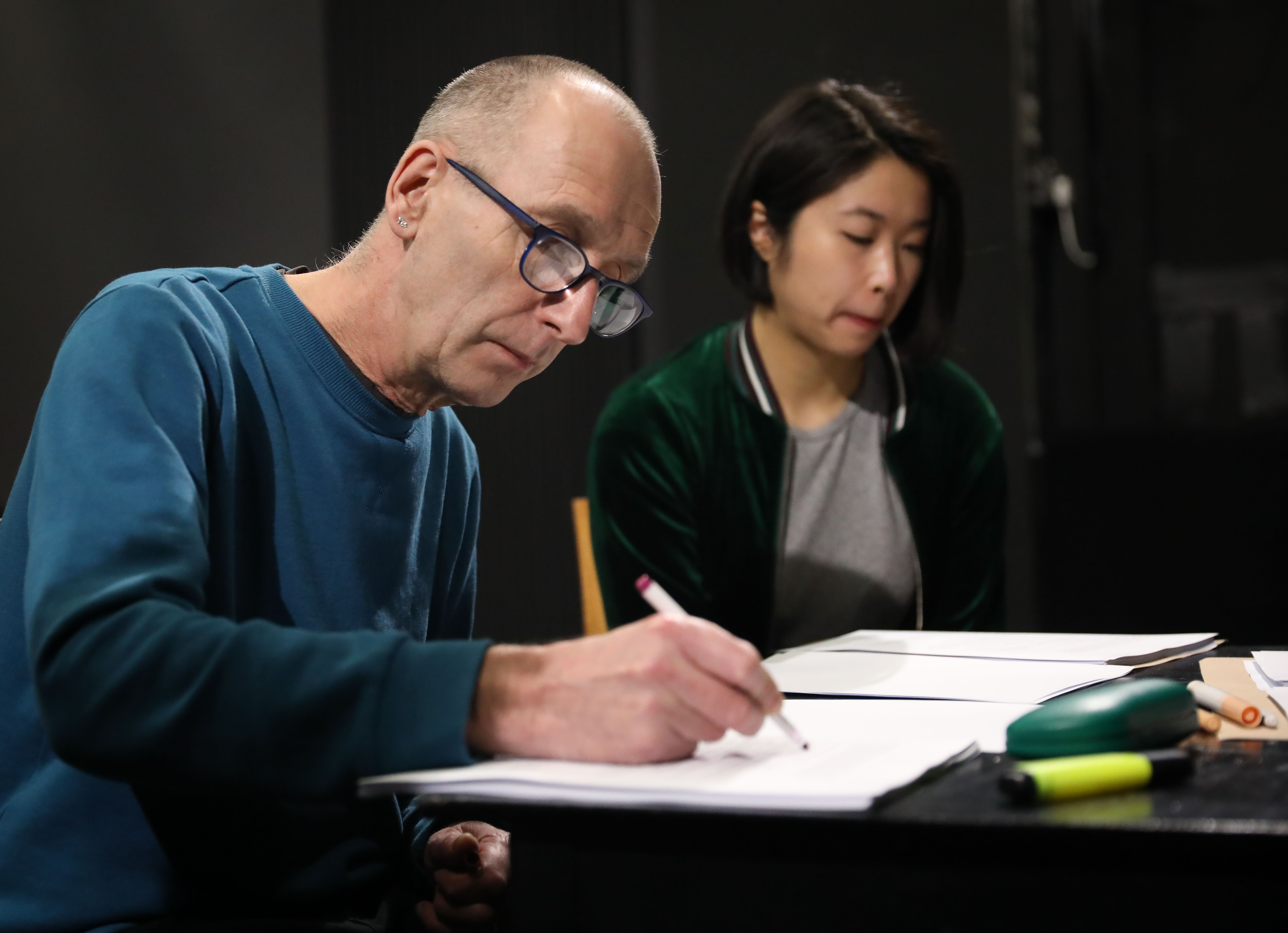
And of course, people will ask: Ah, but what about abuse? Simple: treat it the same as abuse in any other field! I have almost never met a lazy artist. If a handful of messers exist, referring to themselves as artists but never working as artists, they can be quickly exposed as con artists. There will be ways to identify and exclude fraudsters from ill-deserved earnings, just as we root out corrupt police officers, expose millionaires wrongly awarded telecoms contracts, and (if only we would) vote out unfit politicians. But having worked as an artist among artists and nothing else for 40 years, and having sat on some of those benighted local authority and Arts Council peer panels that assess funding applications from young and mature artists, desperate to just work and be paid, I would wager that slackers in my sector are very, very few. The real abuse is the false sense we give to our young theatre graduates and stressed-out mid-life artists that just because they work hard and bring us joy and stimulation, they can live and make a career.
So my simple plea to the new minister, once he has fully sounded his bark and completed his sniffing around for suspected waste: Rearrange things! Demand all-of-Government engagement: create a viable public art register and system whereby we pay a wage, not to two thousand but several thousand of our artists.
And once the immediate governance questions are resolved, leave the Arts Council, without interference – and with adequate funds and IT systems – to look after quality assurance; funding of sustainable organisations; and yes – continuing with their prize-giving competition schemes that recognise particular individual excellence. In this way, Arts Council money is used intelligently to underwrite the researches and the outputs, but not the mortgage payments, the nappies, the dinners and the human right to a regular wage, of our nation’s artists.
 Declan Gorman